Coursera Capture
Coursera came to our team with a problem that required a strategic solution: both learners and hiring managers reported that online credentials didn't carry the same weight as traditional degrees, undermining the platform's core value proposition. The gap was in how learners could communicate their achievement to employers in a way that felt credible.
My primary role was research synthesis and experience strategy. I led the analysis of primary and secondary research across both learner and employer perspectives, organizing findings into frameworks and themes to surface where the value breakdown was occurring and where users said they were frustrated by the entire end-to-end journey.
I used journey mapping and the 5E framework (Entice, Enter, Engage, Exit, Extend) to map the current state experience stage by stage and identify the specific moments where credibility was lost. From that map, I helped develop the future state concept: a feature that reframes how learners document and communicate progress, linking visible achievement signals directly to application materials viewed by potential employers.
The result is Athena Capture: a progress-sharing feature that increases learner credibility and closes the gap between what learners earn and what employers can tangibly evaluate
-
User interviews across learner and recruiter/employer populations, participant recruitment, survey design for study screening, journey mapping, 5E framework analysis, career pathways journey framework, comparative/competitive analysis, multi-source data synthesis, insight and tension frameworks
-
Figma, Miro, user flows, wireframes, low-fidelity and high-fidelity prototyping, interaction design, experience design, future-state mapping, high level concepting
-
The breakdown was happening at the communication layer between the platform and the employer. Learners had no tool to make their progress legible outside of Coursera's ecosystem. Athena Capture was designed to fix exactly that.
The Process
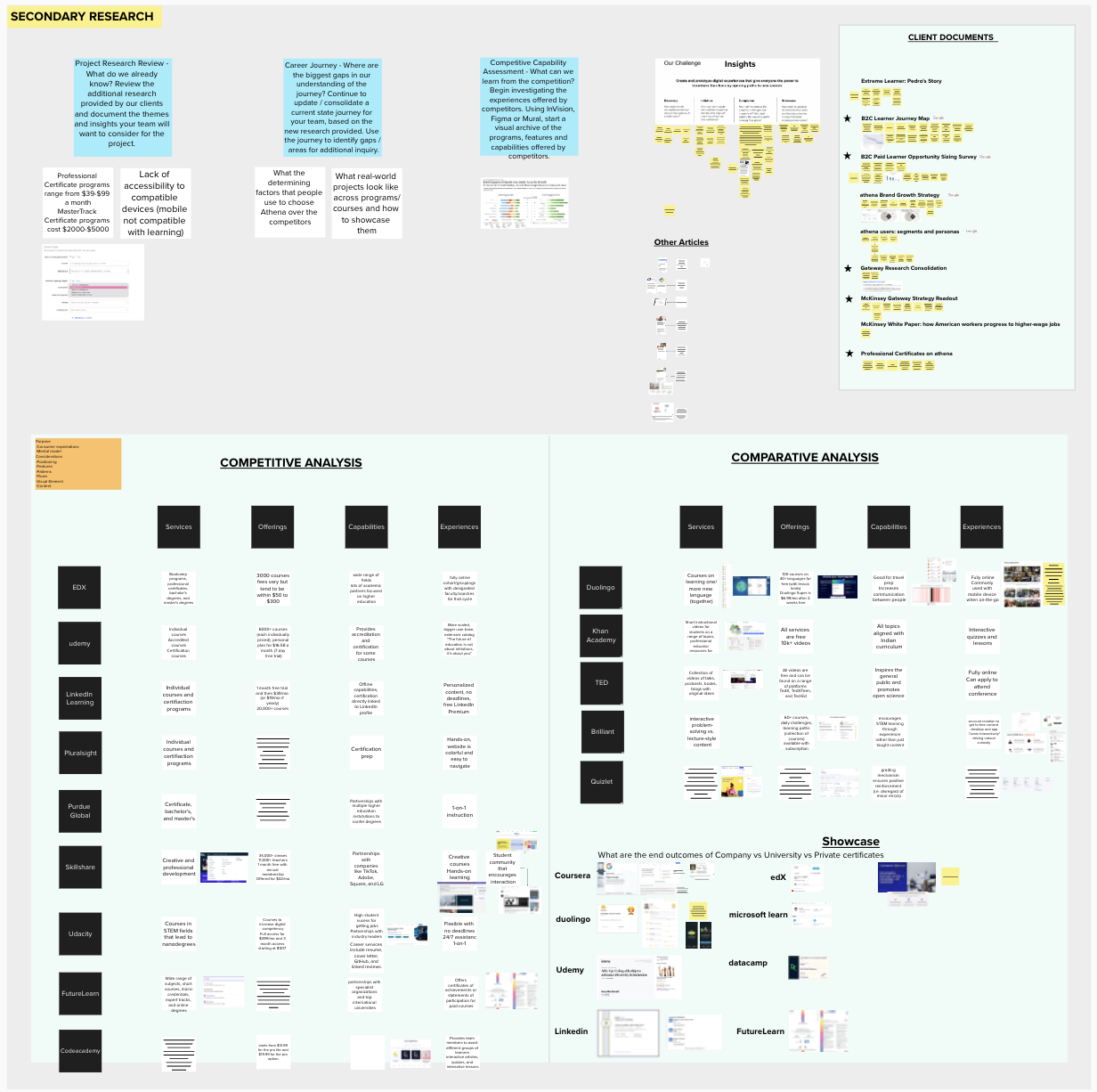
Secondary research deepened the picture. We mapped nine major learning platforms: EdX, Udemy, LinkedIn Learning, Skillshare, Udacity, and others. We looked at services, offerings, capabilities, and experience design to understand where Coursera's value actually stood out in a crowded market. Two findings stood apart. First, accessibility: a recurring gap across the competitive set was poor compatibility with mobile and lower-bandwidth devices, directly excluding the career-switcher and career-starter audiences Coursera was trying to reach. Second, pricing structure: professional certificate programs across the market ranged from $39 a month to $5,000 for MasterTrack programs, meaning cost itself was a barrier shaping who could access "gateway" learning in the first place. Both findings reinforced that closing the employer credibility gap sat inside a wider system of access barriers that any solution needed to account for.
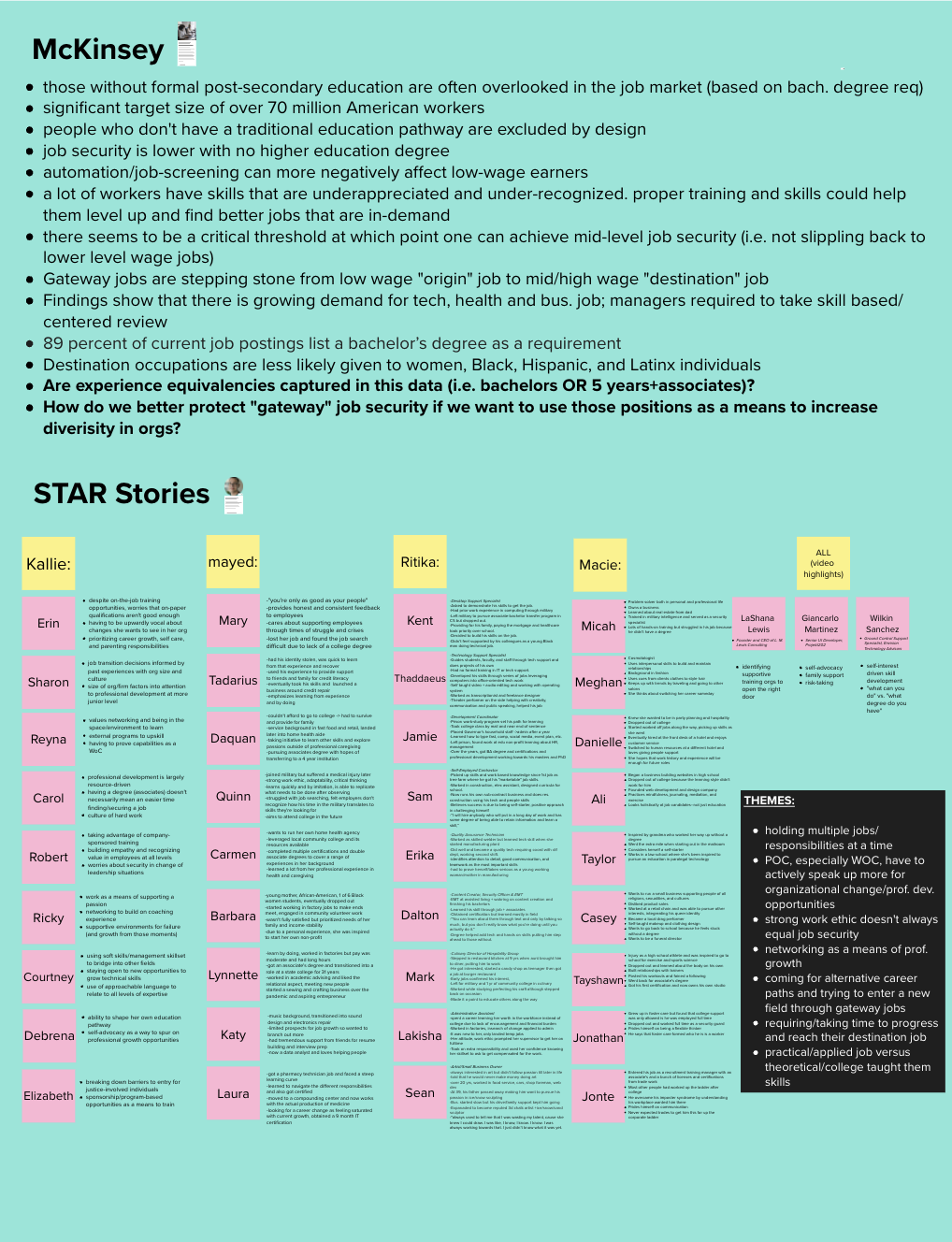
Secondary research synthesis pairing McKinsey workforce data with primary STAR-method interviews, surfacing the gateway-job mechanism, the credibility gap facing non-degree workers, and recurring themes around self-advocacy and skill-based mobility that shaped the Athena Capture concept.
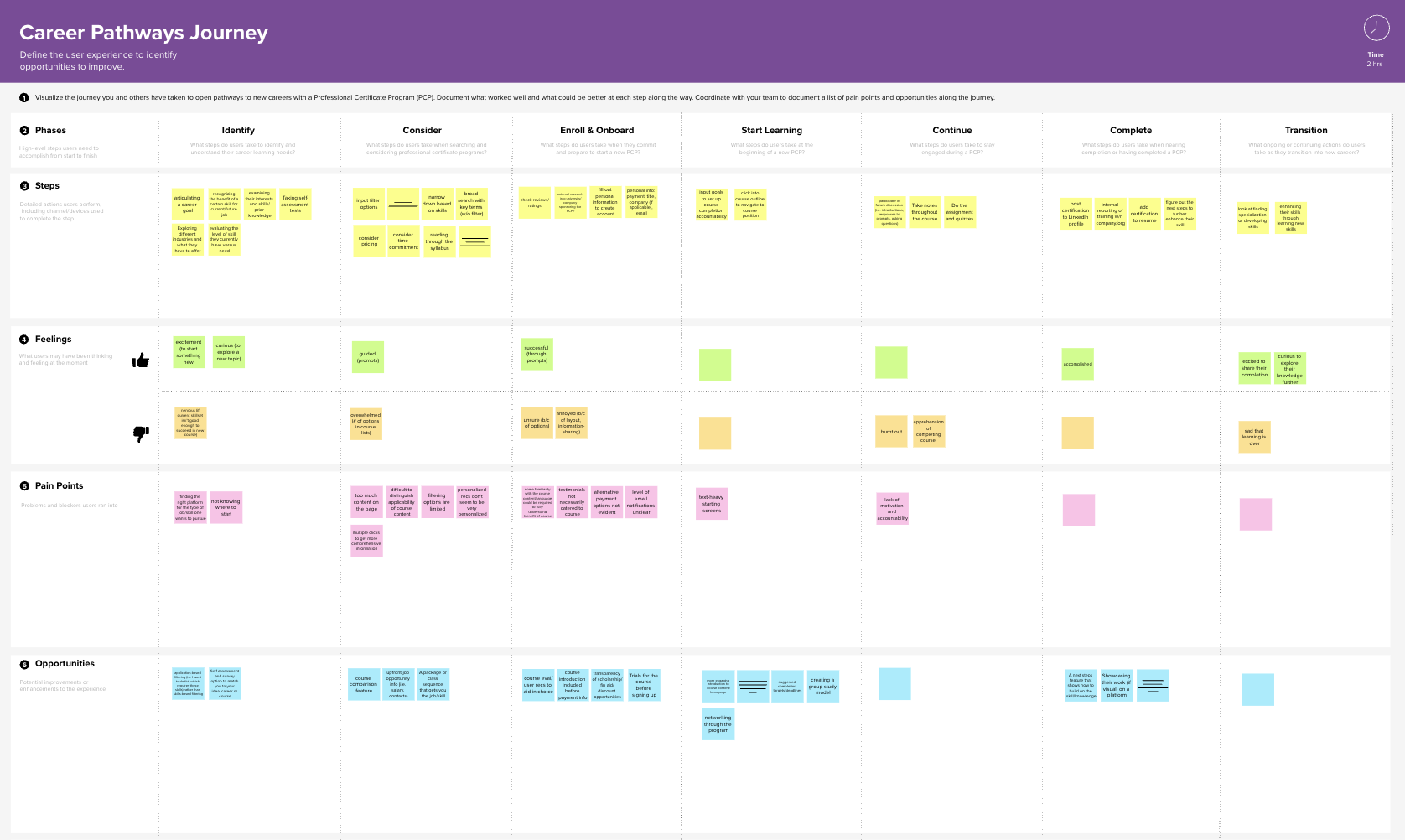
Current state journey map tracing the full Career Pathways experience (identify through transition) capturing steps, emotional highs and lows, pain points, and opportunity areas at each phase to pinpoint exactly where the credibility gap was breaking down.
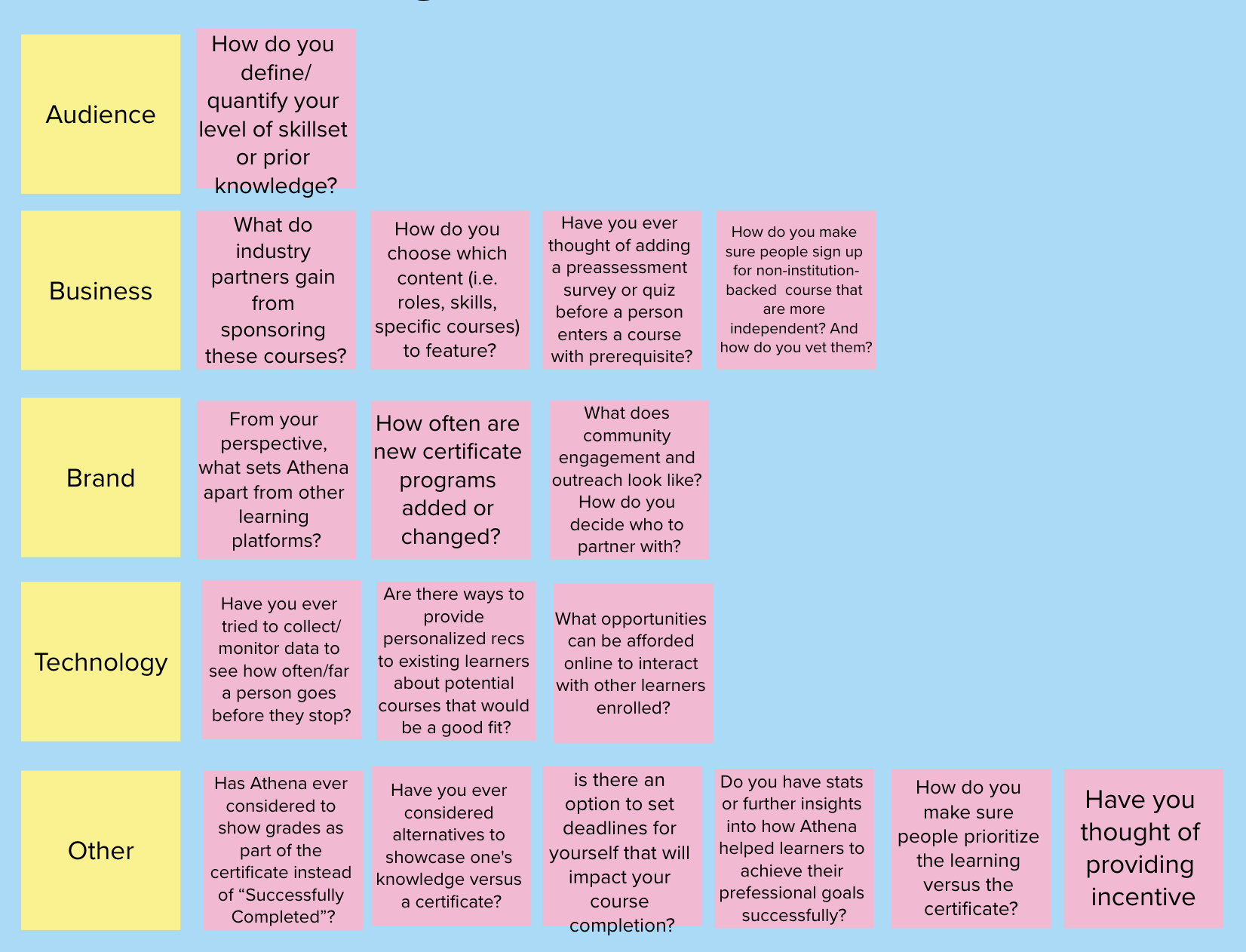
Our discovery interview with Coursera's team surfaced two constraints that shaped the entire direction of our research: roughly 50% of learners who enrolled in a course never started it, pointing to a breakdown well before the credibility gap with employers even became relevant, and Coursera had intentionally stayed out of the application and hiring process, focusing strictly on education rather than career placement. That meant any solution had to work within Coursera's existing scope, closing the employer credibility gap without pushing the platform into recruiting territory it had no interest in entering.
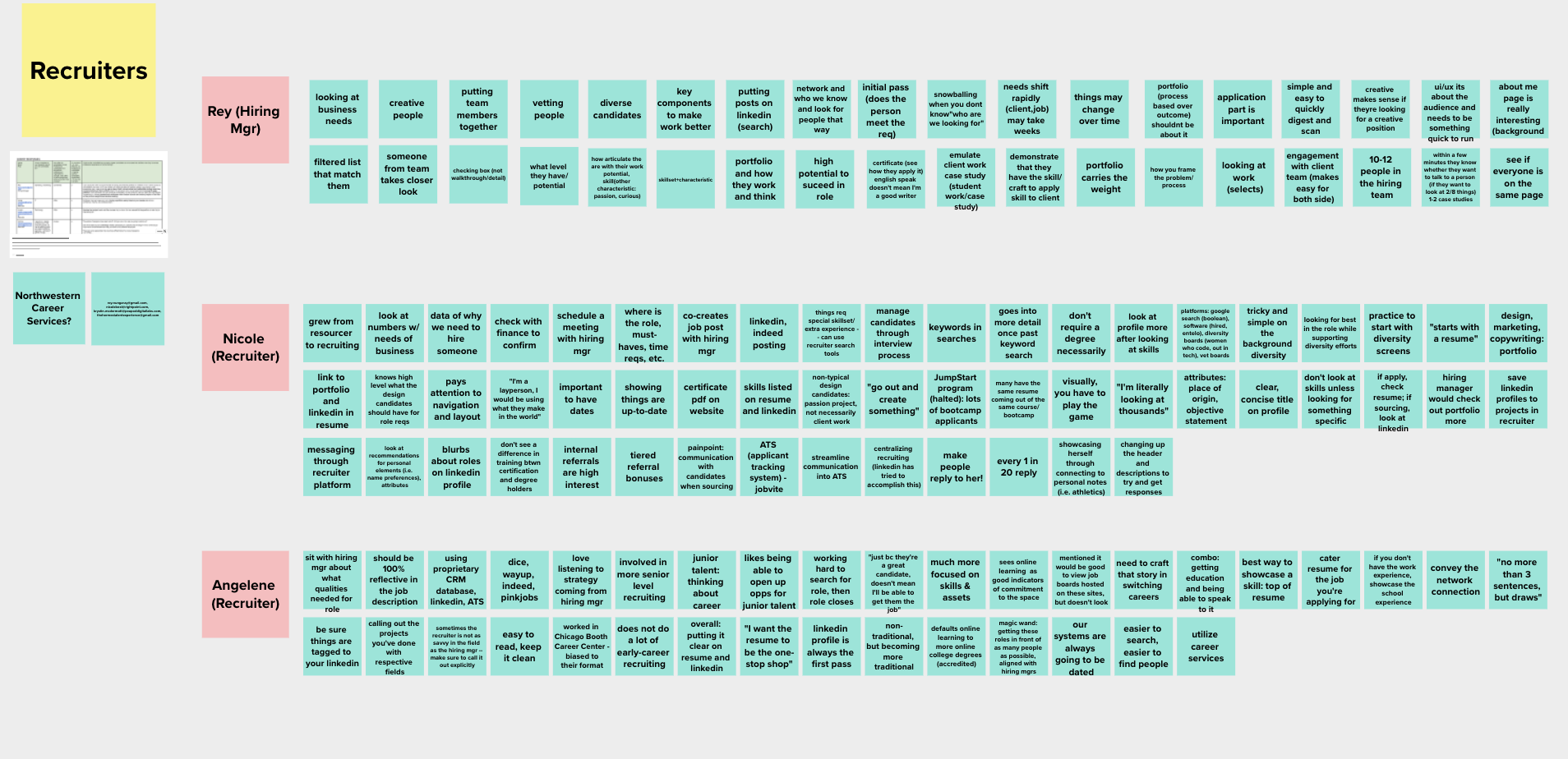
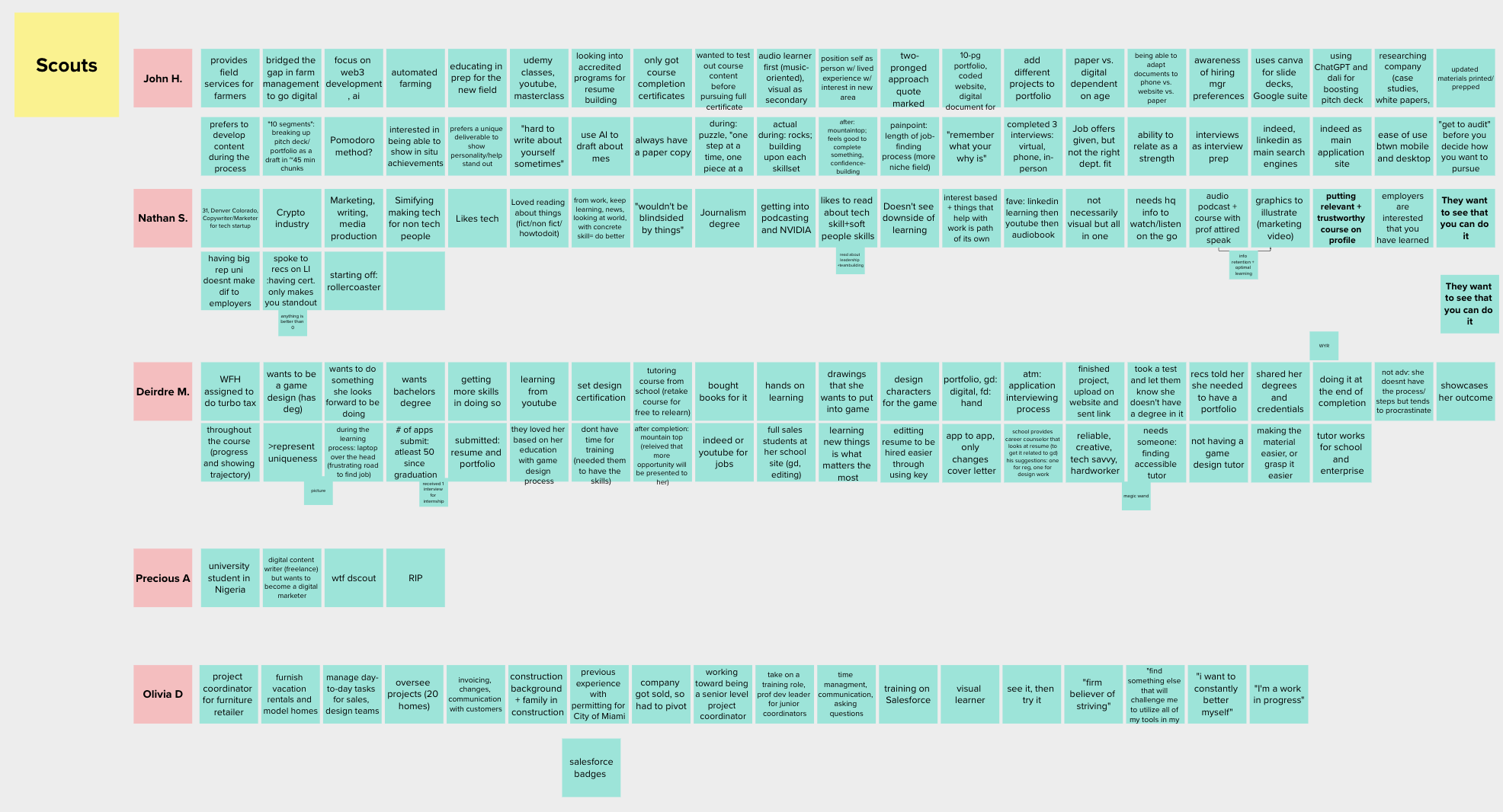
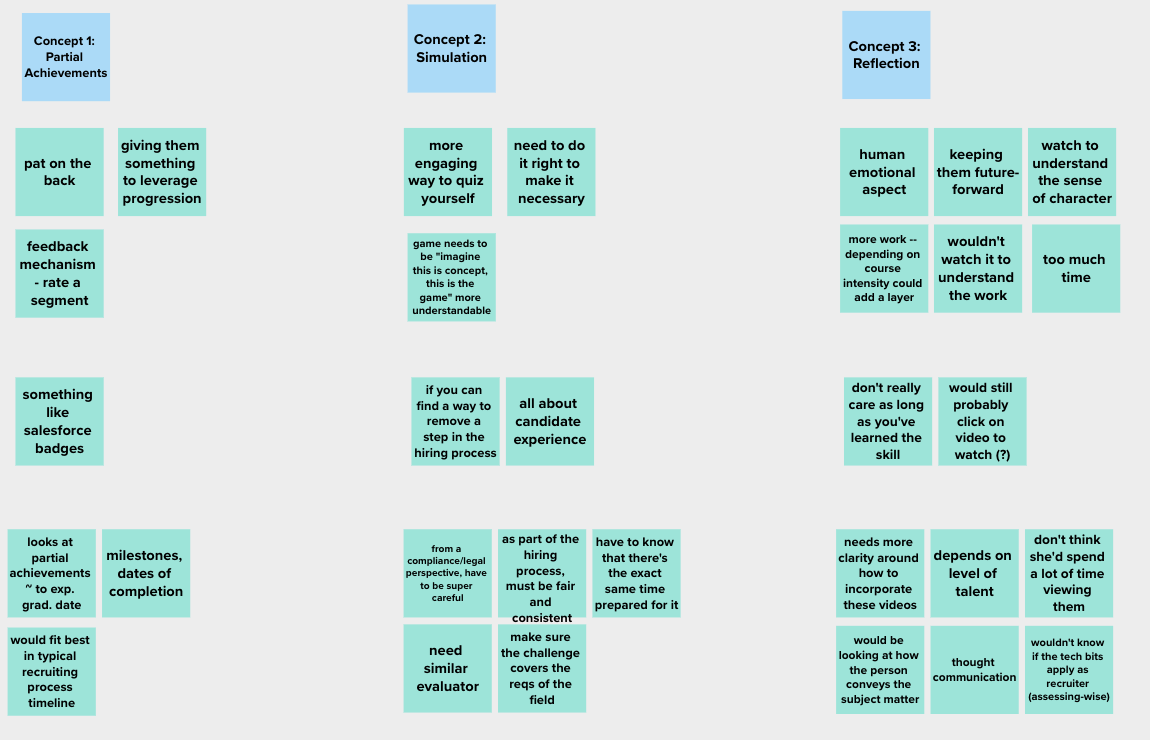
Interview synthesis spanning recruiters, hiring managers, and active job seekers, paired with concept testing on three feature directions: partial achievements, simulation-based assessment, and reflection videos. These surfaced what each audience actually valued and where each concept introduced new friction, like hiring-process consistency concerns and uncertainty over how to weigh video content in candidate evaluation.
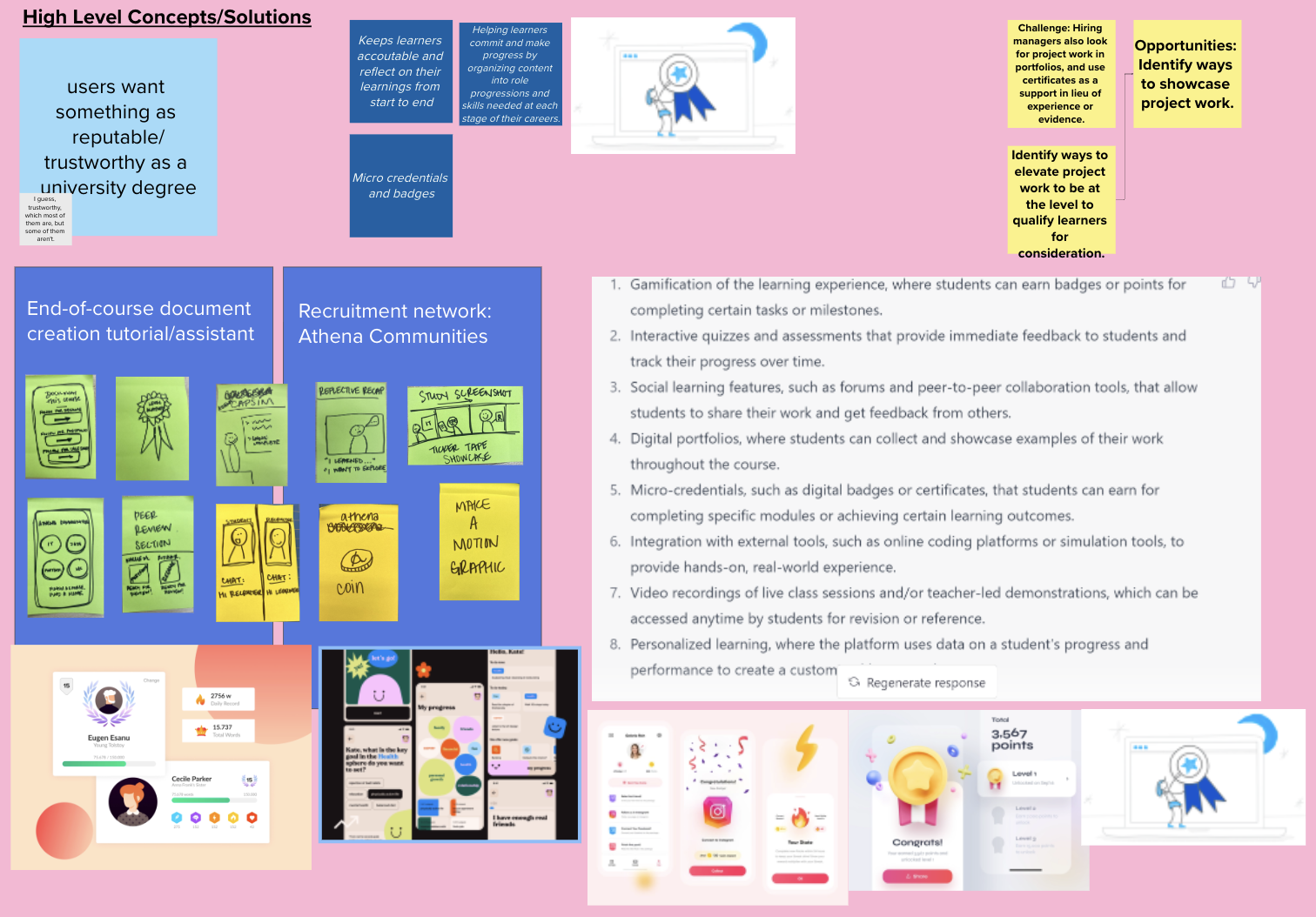
High-level concept exploration following the interview synthesis: translating insights into directions like an end-of-course portfolio assistant, recruitment-focused learner communities, micro-credentials, and gamified progress tracking, alongside AI-assisted ideation and competitive UI references to ground each concept in market reality before narrowing toward Athena Capture.
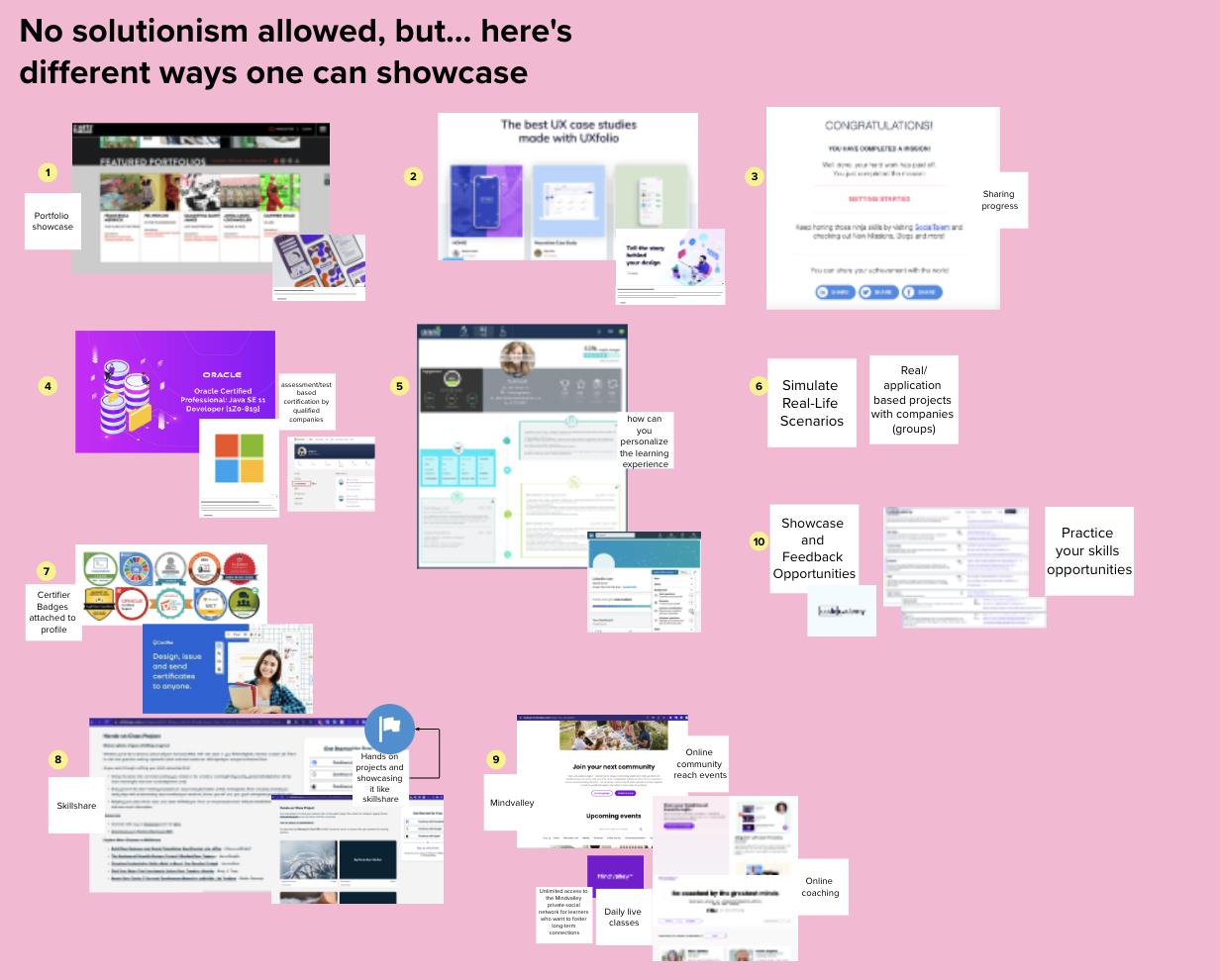
A deliberately non-prescriptive showcase board: ten distinct precedent models (portfolio platforms, certification badges, simulated real-world projects, social learning communities) presented to recruiters and sourcers in second-round interviews to validate direction before committing to a final prototype concept.
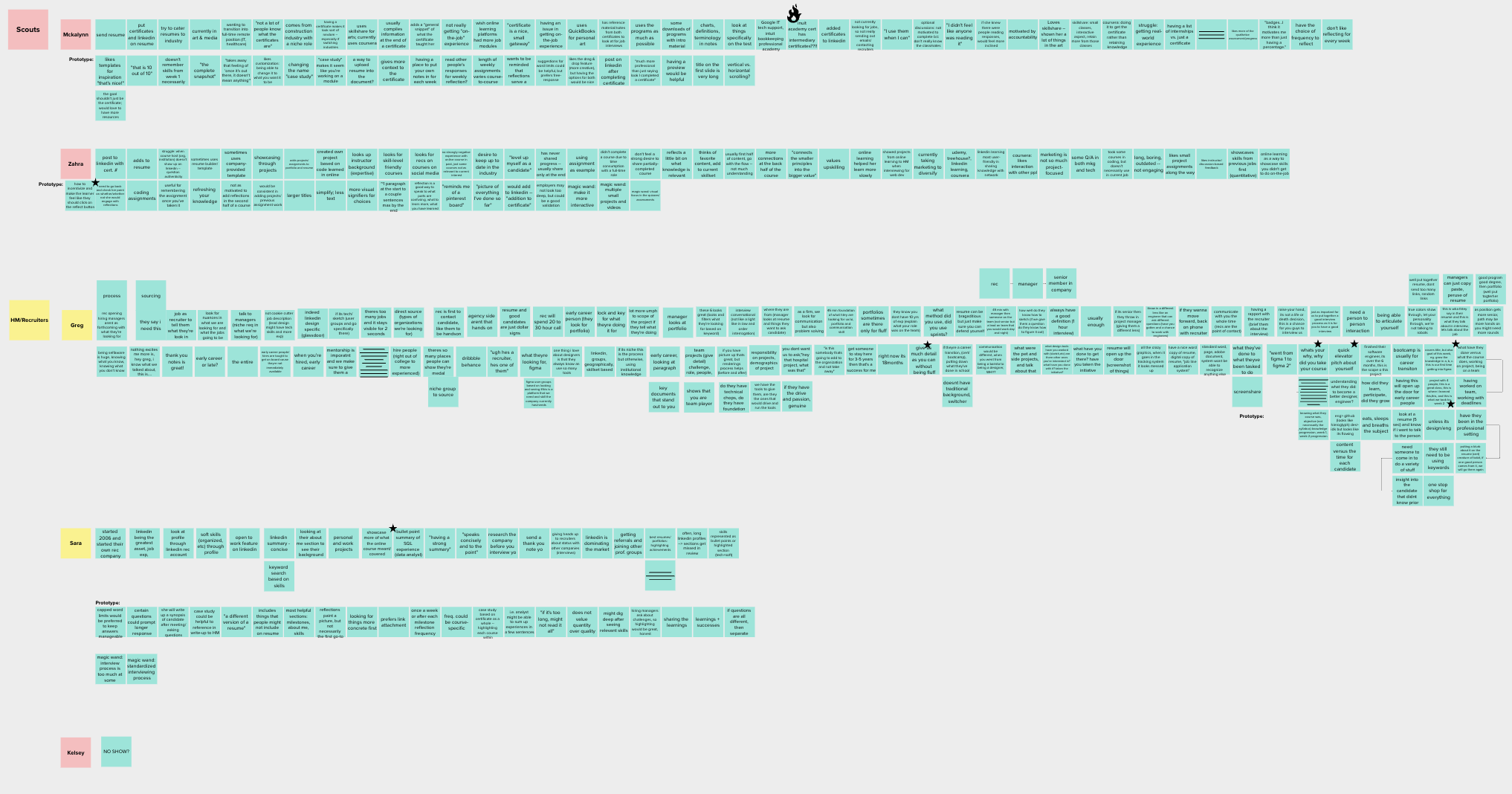
Second-round interviews with scouts, hiring managers, and recruiters after presenting the precedent showcase board. Testing reactions to specific prototype directions and surfacing prioritized themes like resume-anchored proof of completion, keyword-driven LinkedIn discoverability, and recruiters' consistent emphasis on early-career applicants demonstrating drive and foundational skill over polish.
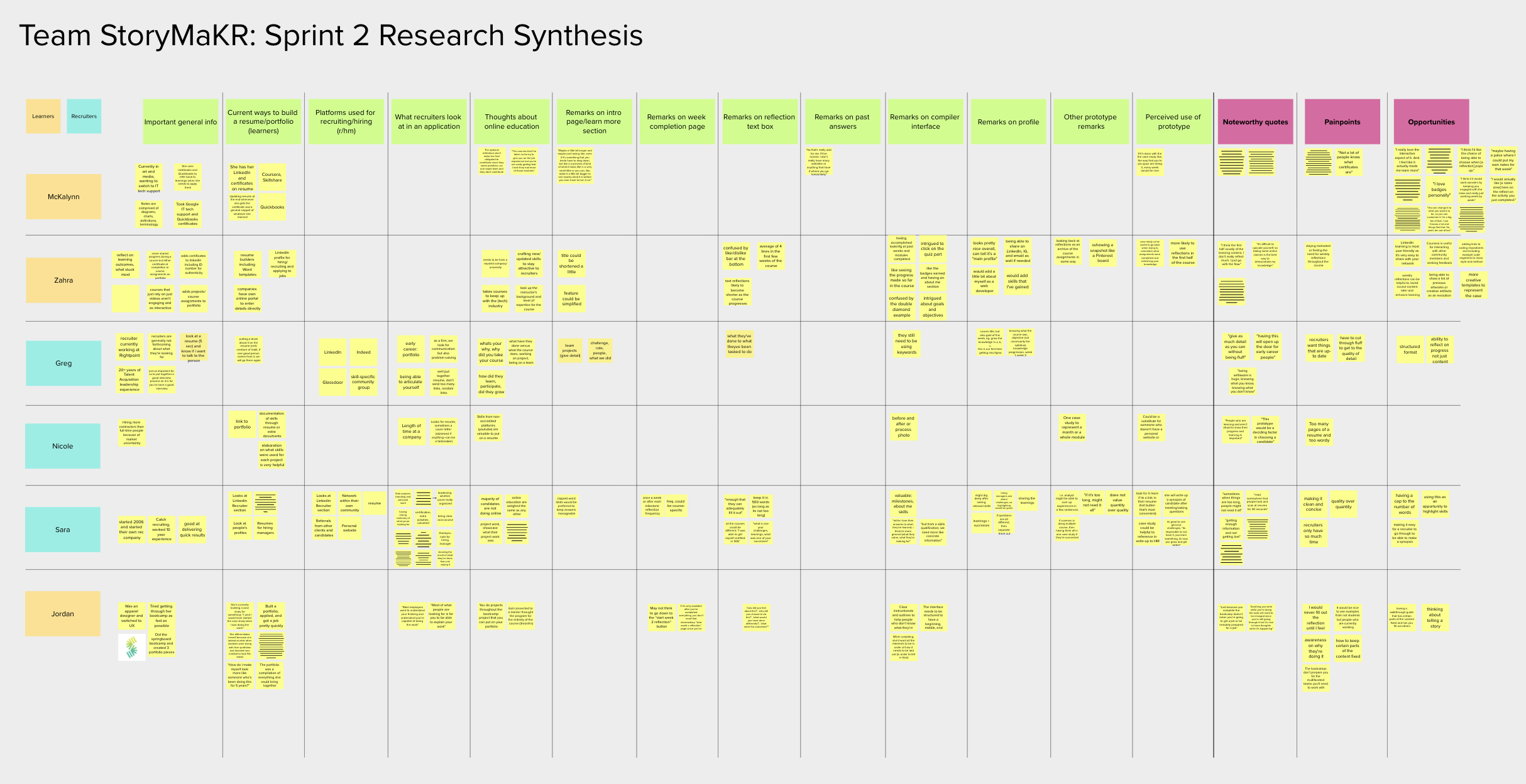
Final research synthesis structured directly against prototype feedback. Organized learner and recruiter responses by feature area (intro page, reflection text box, profile, compiler interface) alongside cross-cutting quotes, pain points, and opportunities, forming the direct bridge from research to the Athena Capture prototype.
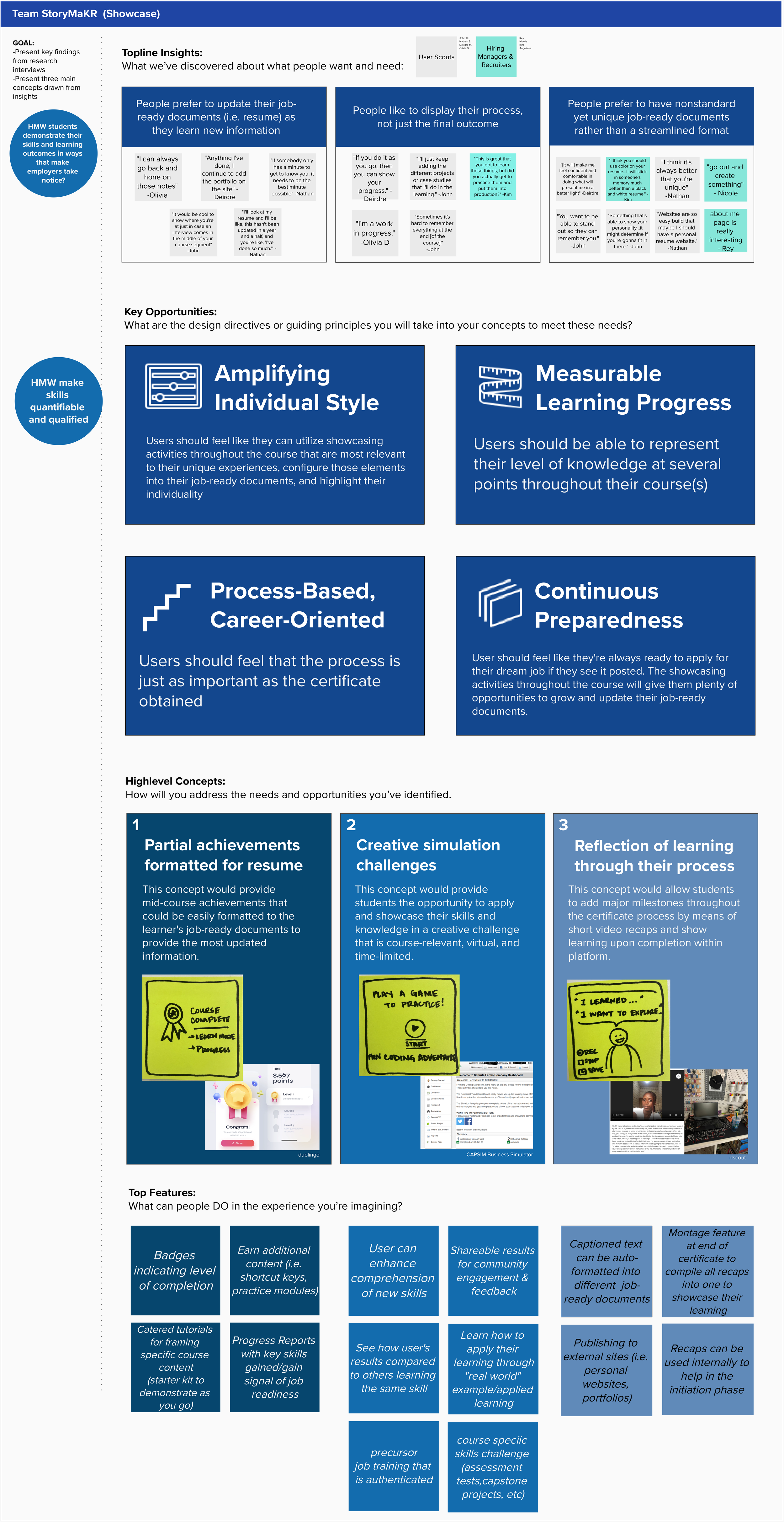
Our team's final showcase deck (delivered with prototype), which distilled research into three main insights, four design principles, and three concept directions, with specific feature breakdowns for each. This synthesis directly informed the design and feature set of Athena Capture.